Das „Special K“ von Pring
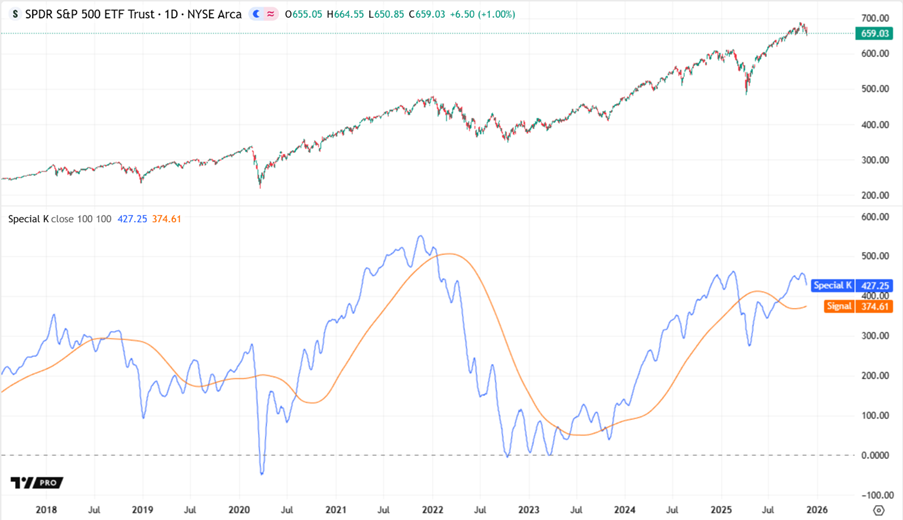
Das „Special K“ wurde von Martin J. Pring entwickelt und ist ein Momentum- und Trendindikator, welcher die durchschnittlichen „Rate of Change“ (ROC) über mehrere Längen in einem Oszillator vergleicht. Sie erhalten auf diese Weise eine gefilterte und zusammengefasste Ansicht der Preiszyklen in einem kurz-, mittel- und langfristigen Zeitraum. Pring hat für die Entwicklung seines „Special K“ die Konzepte aus dem Know Sure Thing indicator (KST) aufgegriffen und mit seinen Marktobservationen kombiniert. Er hat hierbei hauptsächlich das Ziel verfolgt, auf diese Weise Trends und Umkehrungen zu erkennen, so wie um seinen Indikator als Hilfeleistung bei kurzfristigen Handelsgeschäften zu verwenden, welche einem bestehenden Trend folgen.
Berechnung
Der „Special K“ ist eine gewichtete Summe von Simple Moving Averages (SMAs) der Rate of Change (ROC) des Marktpreises zu mehreren Rückblicklängen. Pring hat hierbei das Gewicht und die Rückblicklänge für jede durchschnittliche ROC auf seinen Observationen der Marktzyklen und Trends basiert. Diese Summe kombiniert die folgenden Werte:
- 10-Balken SMA der 10-Balken ROC
- 10-Balken SMA der 15-Balken ROC × 2
- 10-Balken SMA der 20-Balken ROC × 3
- 15-Balken SMA der 30-Balken ROC × 4
- 50-Balken SMA der 40-Balken ROC
- 65-Balken SMA der 65-Balken ROC × 2
- 75-Balken SMA der 75-Balken ROC × 3
- 100-Balken SMA der 100-Balken ROC × 4
- 130-Balken SMA der 195-Balken ROC
- 130-Balken SMA der 265-Balken ROC × 2
- 130-Balken SMA der 390-Balken ROC × 3
- 195-Balken SMA der 530-Balken ROC × 4
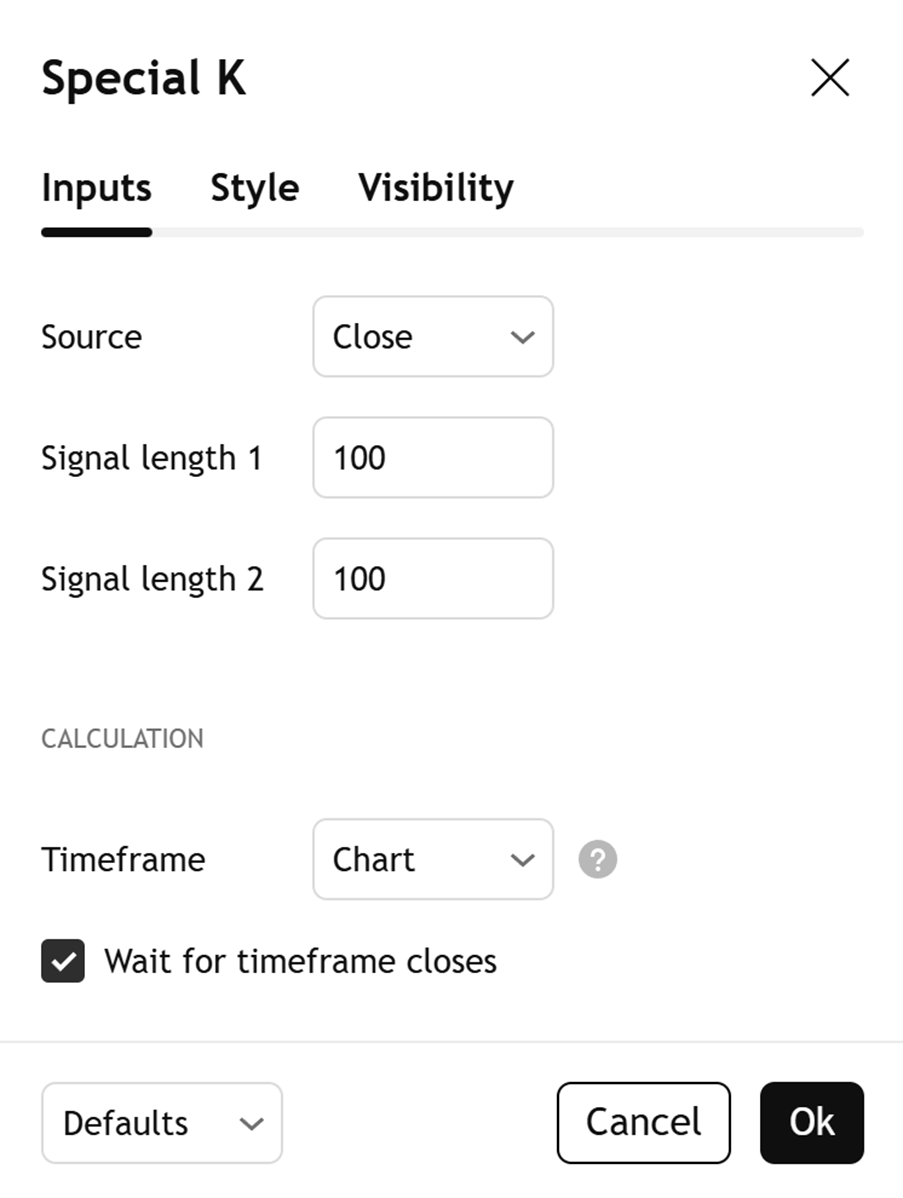
Das Ergebnis hierbei ist ein Kompositoszillator, welcher eine gewichtete Kombination der signifikanten Marktzyklen mit einem reduzierten Lärm darstellt. Der Indikator beinhaltet auch eine zweifach geglättete Signallinie für Umkehrungen. In der Standardeinstellung wird ein 100-Balken SMA des „Special K“ berechnet, welches dann auf einen zweiten 100-Balken SMA angewandt wird. Sie können jedoch die Glättungslänge für die Signallinie in den Indikatoreinstellungen Ihren Bedürfnissen anpassen (im Tab „Eingaben“).
! Hinweis: Weil der „Special K“ einen bis zu 195-Balken SMA der 530-Balken ROC berechnet, benötigen Sie einen Chart mit mindestens 725 Balken an Daten. Der Indikator wird eine Fehlermeldung anzeigen, wenn der Chartverlauf über weniger als 725 Balken verfügt.
Der primäre Zweck des „Special“ ist es, Trends und Umkehrpunkte zu erkennen:
- Steigende Spitzen und Abhänge im „Special K“ suggerieren uns, dass der Primärtrend „bullish“ ist. Fallende Spitzen und Abhänge suggerieren uns das Gegenteil.
- Ein positiver „Special K“ indiziert eine langfristige „Bullish-Kraft“, und ein negativer Wert indiziert eine langfristige „Bearish-Kraft“.
- Überschneidungen zwischen dem „Special K“ und der Signallinie können eine Umkehr oder Fortsetzung des Primärtrends suggerieren. Wenn der „Special K“ über die Signallinie steigt, dann kann uns dies nahelegen, dass sich der Trend entweder aufwärts verlagert oder seine Aufwärtsbewegung fortsetzt. Wenn der „Special K“ unter die Signallinie fällt, dann kann uns dies das Gegenteil nahelegen.
- Pring empfiehlt, außerdem auch Trendlinien auf dem „Special K“ einzuzeichnen, um auf diese Weise Umkehrpunkte zu finden. Wenn der „Special K“ eine langfristige Trendlinie durchbricht, dann kann uns dies suggerieren, dass nun der Primärtrend von „bullish“ zu „bearish“ wechselt (oder umgekehrt).
Trader verwenden diesen Indikator oft zusammen mit dem KST, gleitenden Durchschnitten oder weiteren Momentumindikatoren, um die kurzfristigen Signale basierend auf den Trends im „Special K“ zu filtern.
Eingaben
Quelle
Die Werteserie, welche für die Berechnung des „Special K“ verwendet werden soll.
Signallänge 1
Die Anzahl der Balken für den ersten SMA für die Berechnung der Signallinie.
Signallänge 2
Die Anzahl der Balken für den zweiten SMA für die Berechnung der Signallinie.
Zeitrahmen
Hier können Sie den Zeitrahmen einstellen, welchen der Indikator für seine Berechnungen verwenden soll. Das Kästchen „Auf die Zeitrahmenschließung warten“ bestimmt, ob der Indikator seine Ergebnisse nur anzeigen wird, wenn ein Balken in dem Zeitrahmen geschlossen wird. Sehen Sie sich diesen Artikel an, wenn Sie mehr hierzu erfahren möchten.