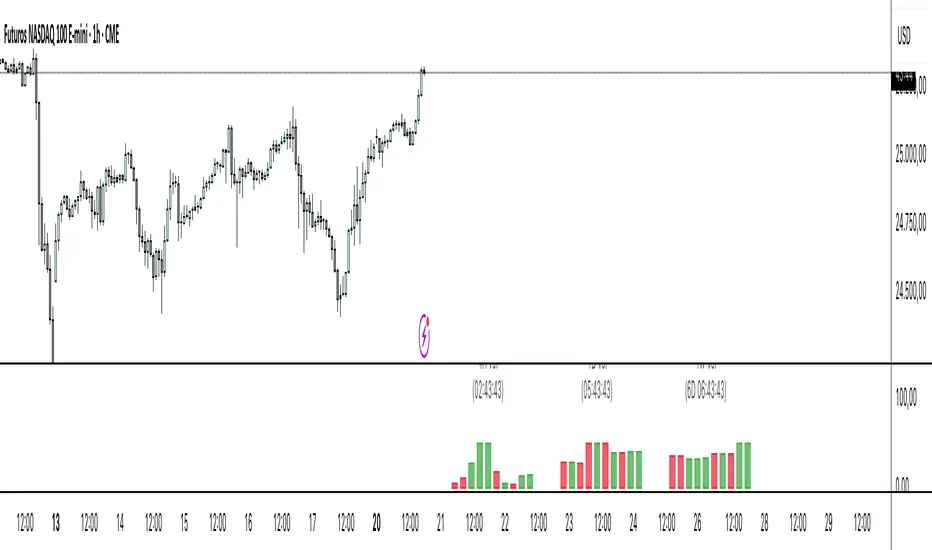
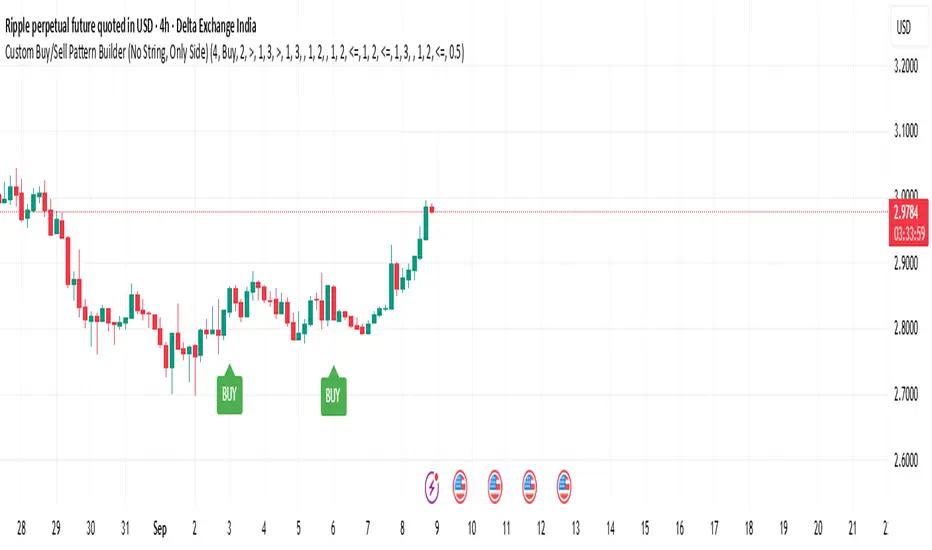
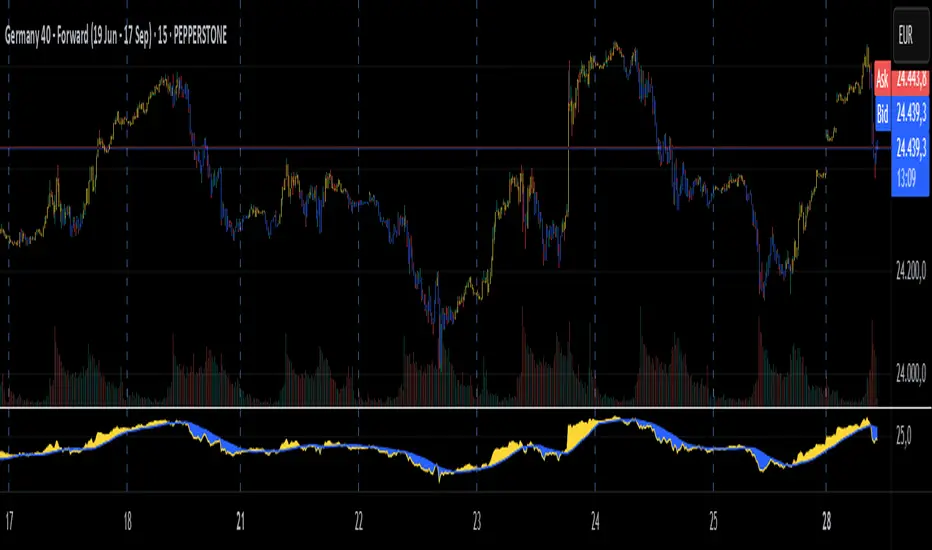
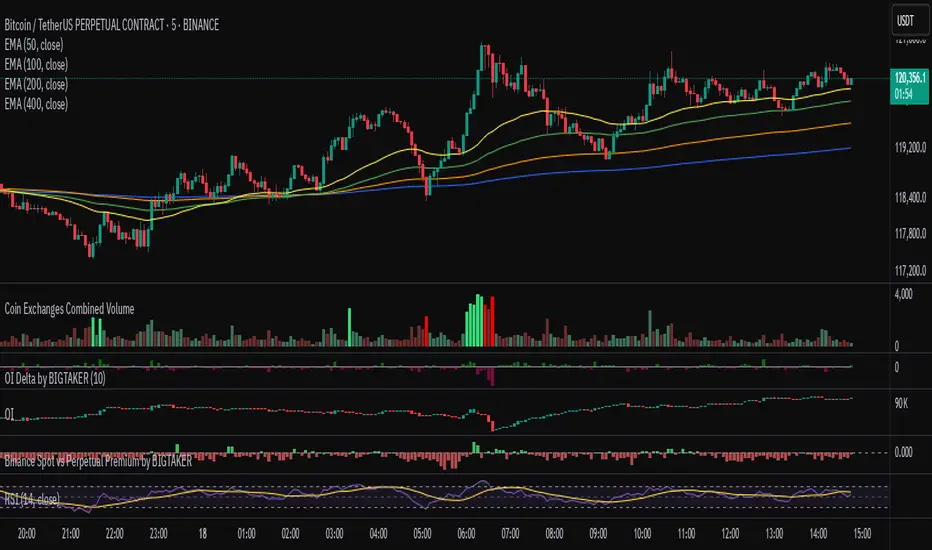
Blockcircle Price Gaps (PG)I got tired of price gap indicators that dump every zone on the chart and leave you to figure out which ones actually matter. I have tried every single one imaginable. Therefore, I built this one to score each gap automatically based on how close it is, how it formed, and whether it aligns with the trend. Instead of cryptic numbers, it just tells you: Strong, Moderate, or Weak, plus how far away it is. You see what matters, skip what doesn't. Hopefully, you find it helpful!
If you have other ideas to improve it even further, please let me know, and I can integrate them.
WHAT MAKES IT ORIGINAL AND DIFFERENT
Standard gap indicators display every detected imbalance with identical visual treatment, leaving traders to manually assess which zones matter. This creates cluttered charts and analysis paralysis.
This BLOCKCIRCLE PRICE GAPS (PG) indicator solves that problem with a Relevance Engine that automatically scores each gap from 0 to 100 and translates scores into plain language: Strong, Moderate, or Weak. Each zone displays its strength rating and distance from the current price, so you instantly know which gaps deserve attention and how far the price must travel to reach them.
The scoring combines four factors that research shows correlate with zone effectiveness:
Proximity: Gaps closer to the current price score higher because nearby zones influence immediate price action more than distant ones.
Formation Volume: Gaps created during above-average volume suggest institutional activity rather than random price movement.
Impulse Strength: Gaps formed by strong moves (measured against ATR) indicate genuine supply/demand imbalance rather than noise.
Trend Alignment: Support gaps in uptrends and resistance gaps in downtrends receive bonus points for trading with momentum.
Visual intensity reflects strength automatically. Strong zones appear darker and more prominent. Weak zones fade into the background. You see what matters without decoding numbers.
HOW IT WORKS
Price Gaps form when aggressive buying or selling creates an imbalance, leaving unfilled space between candles. These zones often act as support (bullish gaps below price) or resistance (bearish gaps above price) when the price returns to them.
Detection uses the standard three-candle method: a bullish gap exists when the current low exceeds the high from two bars prior. A bearish gap exists when the current high falls below the low from two bars prior.
What makes this implementation different is continuous relevance tracking . Each bar, every gap receives an updated score based on current conditions . As the price moves away, the proximity scores decrease. As gaps age, time decay gradually reduces their overall relevance. When capacity limits are reached, the lowest-scoring gap is removed first, ensuring your chart always shows the most actionable zones.
Labels show practical information:
Strength rating (Strong, Moderate, or Weak)
Zone type (Support or Resistance)
Distance from current price with direction (+12% means above, -8% means below)
FEATURES
Relevance scoring with automatic strength classification
Plain-language labels showing strength and distance
Color intensity that reflects zone importance
Retest detection when price returns to unfilled gaps
Proximity filtering to hide distant zones
Age filtering to remove stale gaps
Size filtering for minimum and maximum gap thresholds
Relevance-based capacity management
Information panel with zone counts and trend context
Multiple label style options
HOW THE COMPONENTS WORK TOGETHER
The system operates as a filtering pipeline:
Size filters remove gaps that are too small (market noise) or too large (extreme events unlikely to fill).
The Relevance Engine scores qualifying gaps based on proximity, volume, impulse, and trend.
Gaps below the minimum score threshold are hidden.
Proximity and age filters remove distant or stale gaps.
When at capacity, the lowest-scoring gap is removed to make room for new detections.
This layered approach ensures only the most relevant gaps appear on your chart.
CONFIGURABLE SETTINGS
Display Settings control how many zones appear and how they are displayed.
Label Style lets you choose what information displays: Strength plus Distance (default), Strength Only, Distance Only, Score Only, or None.
Relevance Engine settings include the master toggle and minimum score threshold. The Scoring Weights section allows advanced users to adjust how much each factor contributes.
Filters control size thresholds, maximum distance from price, and maximum age in bars.
Retest Alerts notify you when the price returns to an unfilled gap with three sensitivity options.
Zone Behavior controls whether filled gaps are removed and what counts as a filled gap.
HOW TO USE
The default settings work well for most timeframes and markets. Strong zones (shown in brighter colors with yellow text) have multiple factors aligned and deserve the most attention. Moderate zones are worth watching. Weak zones provide context but may not produce reliable reactions.
For active trading, focus on Strong and Moderate zones within 10% of the current price. These are the most likely to influence near-term price action.
For swing trading, expand the Maximum Distance setting to see zones further from the price that may become relevant as trends develop.
When the Retest alert fires, the price is returning to an unfilled gap. Evaluate the zone strength, look for price reaction at the zone boundary, and consider whether the move aligns with the broader trend before trading.
The information panel shows:
Support: Count of bullish gaps (potential buying zones)
Resistance: Count of bearish gaps (potential selling zones)
Unfilled: Zones not yet touched by price
Avg Strength: Overall quality of visible zones
Trend: Current direction based on EMA alignment
LIMITATIONS
Relevance scoring is probabilistic, not predictive. A Strong gap is more likely to produce a reaction based on historical patterns, but any zone can fail.
The trend component uses EMA crossovers (20/50/200), which may lag in choppy markets.
Distance calculations update each bar. During volatile moves, labels may briefly show different values as price swings.
DEFAULTS
These are the defaults, but you would adjust and calibrate it to a specific asset, as needed:
Maximum Zones: 12
Label Style: Strength + Distance
Minimum Score: 20
Maximum Distance: 25%
Maximum Age: 300 bars
If you have any questions at all, please ask away!
Pine Script® Indikator